

Picture this:
You're about to learn everything about "How To Write a Design Brief That Clicks!" — without the jargon, without the fluff, and with at least one dad joke that'll make you groan. Grab your coffee. Let's go.
Key Takeaways
5 min read
- 1What you need to know before printing
- 2Common mistakes to avoid
- 3How to get the best results
Designers are good at many things, and unless you stumble upon a designer who's mastered the psychic arts, mind reading isn't one of them. As much as designers enjoy creative freedom, most crave direction. This is partly because designers have to be creative on demand. They also need to find that sweet spot between aesthetic appeal and real, tangible value in every project they tackle.
Day in, day out, designers bring the ideas in their clients' heads to life. It's a daunting task – made even trickier when you're handed a rubbish design brief.
<AcademyQuote> A great design brief isn't just a document – it's a roadmap that transforms vague ideas into visual gold </AcademyQuote>
Picture this: You're building an addition to your home. The architect arrives on time and asks for the job specifications. "How tall should the walls be?" he asks. "How many doors will you need? Where do they lead?"
"Be creative," you reply.
Weeks later you arrive to find a pool smack in the middle of your living room. Sure, it's beautiful with its cascading water features and all, but this definitely wasn't what you wanted. What's worse, you're now dealing with puddles on your gorgeous new shag carpets. You sheepishly admit this was your own fault and trudge to the bedroom with muddy feet.
Okay, this is quite extreme. But these implications aren't far from reality. When you hand a one-liner brief to a designer, they don't know what you want – and worse, it suggests you don't either.
This is why the design brief is such a powerful tool. And this tool is only as effective as the person using it.
So how do we avoid that living room pool?
Here are the essential ingredients to drawing up the ideal design brief.#
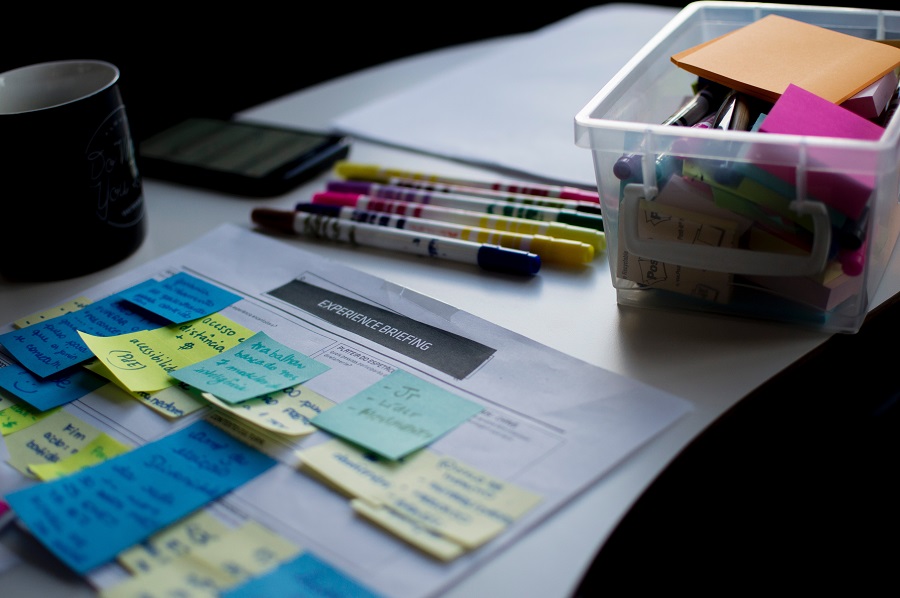
Writing a brief - Photo by Felipe Furtado on Unsplash
Writing a brief
1\. Who are you?#
We live in an age of self-reflection – remember that the freelancer you're hiring might have no clue who you are or what you're about. Include your company profile and a short corporate identity. Let the designer know what colours fit your brand image, how you position certain elements, and which fonts to use. This product will represent you, after all.
2\. Be direct#
Say you absolutely love flowers. Maybe a lost lover gave you red roses years ago that left a lasting impression, or your office is surrounded by so many blooms they've become part of your DNA. Whatever the reason, if you want roses on your <a href="https://www.printulu.co.za/product/business-cards?utm_source=blog&utm_medium=content&utm_campaign=internal" class="internal-link text-[#007756] hover:text-[#005d42] underline font-medium">business card</a>, say so. Express your ideas. Designers will welcome them.
<AcademyProTip> Don't just say "make it pop" – specify what "pop" means to you. Bright colours? Bold typography? Metallic finishes? The more specific you are, the better your results </AcademyProTip>
3\. Keep it simple#
No one wants to read through a 12-page document explaining why you chose blue. However, your colour choice matters. Short and sweet is the way of the brief – but not at the expense of detail. Tell the designer what you want and don't want, then keep it brief (see what I did there?). This lets the designer focus on the task while you concentrate on what you need to do.

Keep it simple - Photo by Rachel Moenning on Unsplash
Keep it simple
4\. Outline your objectives#
Maybe you want to make your website more user-friendly. Perhaps your past <a href="https://www.printulu.co.za/product/flyers?utm_source=blog&utm_medium=content&utm_campaign=internal" class="internal-link text-[#007756] hover:text-[#005d42] underline font-medium">flyers</a> didn't appeal to the youth as much as you'd hoped. Outlining your objectives, target audience, and aims gives the designer greater insight into how to approach and style the project. This increases your chances of getting exactly what you need in less time.
5\. Provide your assets#
Few things frustrate creatives more than sitting down to work, only to discover the logo you've supplied is a tiny 20 x 20 pixel image. Provide the designer with any assets you have: high-resolution logos, images, past iconography, and the like. Again, this saves time. Time is money, and in the world of small business, you can't afford to waste either.
<AcademyDadJoke> Why don't designers ever get lost? Because they always know where their assets are! </AcademyDadJoke>
6\. Establish a rapport#
Having solid rapport with your creative could mean the difference between a product that serves its purpose and one that exceeds your expectations. Don't be afraid to ask your designer questions, and answer theirs in return. This helps both of you feel comfortable throughout the project and will definitely result in better outcomes. Have fun together and bounce ideas off each other – this adds tremendous value, not just to the task at hand but to the working relationships that develop.

Establish Rapport - Photo by rawpixel on Unsplash
Establish Rapport
7\. Some key questions#
Next time you sit down to compile a brief, ask yourself these questions:
- What information/assets/content will the designer need?
- How do I clarify our goals?
- Do they know who we are?
- What are the specifications/dimensions of the final product?
- How urgent is this project?
- If I received this brief, would I know where to begin?
The bottom line#
There you have it. A well-written design brief can mean the difference between delight and disaster. Follow these steps to ensure you and your designer are on the same page and remember:
“Content precedes design. Design in the absence of content is not design, it's decoration."
JJeffrey Zeldman
Related Articles:
- Disappointed with your prints? Don't blame the printer just yet.
- Top design websites for non-designers
- [5 Things Your <a href="https://www.printulu.co.za/product/letterheads?utm_source=blog&utm_medium=content&utm_campaign=internal" class="internal-link text-[#007756] hover:text-[#005d42] underline font-medium">Letterhead</a> Design MUST Include by Law! (Everyone Forgets Number 2)](https://www.printulu.co.za/blog/5-things-letterhead-design-must-include-law/)
- 4 Ways to Save Money on Graphic Design (It Doesn't Have to be Expensive)
- Why Graphic Design is Useless! (Revealed)
[![Subscribe <a href="https://www.printulu.co.za/product/banners?utm_source=blog&utm_medium=content&utm_campaign=internal" class="internal-link text-[#007756] hover:text-[#005d42] underline font-medium">banner</a>](https://www.printulu.co.za/blog/wp-content/uploads/2019/05/Newsletter_Subscribe-01.png)](https://hello.printulu.co.za/popi-compliance--verify-your-email-address)