
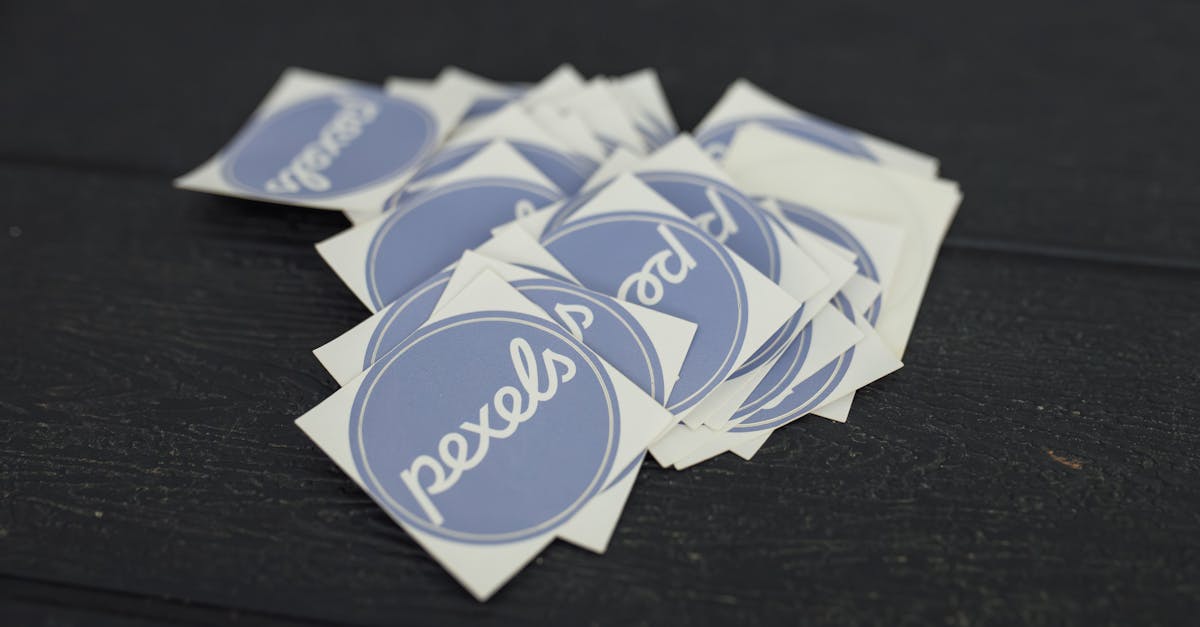
Picture this:
You're about to learn everything about "Sticker Printing Prices South Africa The Flat-Rate Pricing Truth" — without the jargon, without the fluff, and with at least one dad joke that'll make you groan. Grab your coffee. Let's go.
Key Takeaways
10 min read
- 1What Printulu Actually Charges: Real Pricing Data
- 2Why Most SA Printers Penalise Small Orders
- 3The Ordering Strategy That Saves You Money (It's Not What You Think)
- 4When the Flat Rate Doesn't Apply
- 5The Material That Makes the Biggest Difference
- 6The Real Sticker Pricing Trap (And How to Avoid It)
import { StickerPriceCalculator } from "@/components/calculators/StickerPriceCalculator";
Every sticker pricing article tells you the same thing: "Beware the bulk trap — ordering more gets you a lower per-unit rate but costs you more total."
It's good advice. For most South African print shops.
Here's what those articles don't tell you: Printulu's pricing structure is the inverse. Up to 800 units, you pay the same total — R483.33 — whether you order 100 or 800. The per-unit price drops from R4.83 to R0.60. But your total bill doesn't change.
This is the flat-rate pricing truth, and it's the most small-business-friendly sticker pricing structure in South Africa.
What Printulu Actually Charges: Real Pricing Data#
All prices below are for standard vinyl stickers — 100×100mm, full colour, matt laminate — printed on a Roland eco-solvent printer (aqueous, not UV). Verified from Printulu's live pricing API on May 2026.
“**Note:** These prices reflect Printulu's upcoming live pricing structure and may differ from current website pricing. Final prices will be confirmed on the live site when this structure goes live.
PPrintulu Academy
| Quantity | Total Price | Per-Unit Price | vs 100 Units |
|---|---|---|---|
| 100 | R483.33 | R4.83 | — |
| 200 | R483.33 | R2.42 | Same total |
| 300 | R483.33 | R1.61 | Same total |
| 400 | R483.33 | R1.21 | Same total |
| 500 | R483.33 | R0.97 | Same total |
| 600 | R483.33 | R0.81 | Same total |
| 800 | R483.33 | R0.60 | Same total |
| 1,000 | R508.25 | R0.51 | +5% total |
| 2,000 | R611.23 | R0.31 | +26% total |
The key fact: From 100 to 800 units, Printulu charges a flat R483.33. That's an 87% drop in per-unit cost, zero change in total cost.
This is not a discount. This is a flat-rate pricing band — and it means the "bulk trap" logic that applies at other print shops doesn't apply here.
Why Most SA Printers Penalise Small Orders#
To understand why Printulu's structure is different, you need to understand how most print shops price stickers.
Traditional sticker printing has two cost components:
- Setup cost — machine prep, plate making, colour profiling, tooling. This is fixed per job: typically R200-R600 depending on the print method.
- Per-unit cost — ink, substrate, labour, finishing. This scales roughly linearly with quantity.
Most printers pass setup costs directly to customers. This means:
- 1100 stickers: R200 setup + R150 print = R350 total = R3.50/unit
- 21,000 stickers: R200 setup + R800 print = R1,000 total = R1.00/unit
The per-unit price drops. The total goes up. That's the "bulk trap."
Printulu's model is different. The flat R483.33 up to 800 units means Printulu has already absorbed the setup cost into a fixed price point. You pay the same for 100 as you do for 800. The marginal cost of each additional sticker up to 800 is effectively R0.
The Ordering Strategy That Saves You Money (It's Not What You Think)#
The standard advice from sticker pricing articles: "Only order what you need."
That advice is wrong for Printulu — and understanding why reveals the real strategy.
The flat-rate insight: If you order 800 stickers and use 400, you've paid the same as if you'd ordered 400. The marginal cost of the 400 you don't use yet is zero — they're paid for, sitting in a box, waiting.
For Printulu specifically, the economically rational strategy is:
“**If there's any plausible scenario where you'll use 800 stickers within the product's shelf life, order 800.**
PPrintulu Academy
A vinyl sticker with matt laminate lasts 3-5 years indoors without fading. A cafe loyalty stamp at 50 stamps/month uses 600 in 12 months. A product label for a seasonal product line might need 400 in a busy season.
The question isn't "how few can I get away with?" — it's "what's the most I could plausibly use, knowing that ordering more within the 100-800 band costs me nothing extra?"
When the Flat Rate Doesn't Apply#
The flat R483.33 rate holds up to 800 units. Above that, per-unit pricing kicks back in — but the marginal cost is remarkably low:
| Extra Units Ordered | Additional Cost | Cost Per Extra Unit |
|---|---|---|
| 800 → 1,000 | +R24.92 | R0.12/unit |
| 1,000 → 2,000 | +R102.98 | R0.10/unit |
The per-unit cost above 800 is less than R0.12. For context: a R0.10 extra per sticker on a 1,000-unit order is R100. That's the cost of a rush delivery on most orders.
When to order above 800 units:
- 1You have predictable, recurring sticker use (e.g., a catering company labelling 300 boxes/week)
- 2You're branding for an event and know the exact headcount
- 3You have storage and the material is durable (vinyl lasts years)
- 4Your rebrand timeline is 3+ years away
When to stay within the flat band (100-800):
- 1First-time order — you don't know your actual consumption yet
- 2Seasonal or one-time use
- 3Brand or product line likely to change within 12 months
- 4Limited storage space
The Material That Makes the Biggest Difference#
Here's what most sticker pricing guides skip: material matters more than quantity for most SA applications.
Paper stickers fail in humidity. South Africa's coastal cities — Durban, Cape Town, Port Elizabeth — have humidity levels that degrade paper adhesive within months. Vinyl handles it fine.
The pricing above is for vinyl stickers with matt laminate. Here's how other materials compare:
| Material | Best For | Indoor Life | Outdoor Life | Waterproof |
|---|---|---|---|---|
| Matt paper | Temporary, indoor promotions | 6-12 months | 1-2 months | No |
| Gloss paper | Product labels, indoor | 12-18 months | 3-6 months | No (laminated) |
| Vinyl (standard) | General use, small runs | 5-8 years | 2-4 years | Yes |
| Vinyl polymeric | Vehicle, coastal, outdoor | 8-12 years | 5-7 years | Yes |
| Holographic | Brand impact, premium products | 2-3 years | 12-18 months | Yes |
| Chrome metallic | Premium packaging | 3-5 years | 2-3 years | Yes |
The cheapest sticker that fails in your environment isn't cheap. A R3.00 vinyl sticker that lasts 4 years outdoors costs less per year (R0.75/year) than a R1.20 paper sticker that needs replacing every 8 months (R1.80/year).
For South African coastal use: vinyl polymeric is worth the premium. For most indoor applications: standard vinyl handles everything.
The Real Sticker Pricing Trap (And How to Avoid It)#
There is a real trap in sticker ordering — just not the one most articles describe.
The real trap: Ordering too little and having to reorder.
Every re-order at Printulu costs R483.33 (the flat rate). If you order 300 stickers, use them in 5 months, then reorder 300 more, you've paid R966.66 for 600 stickers total.
If you'd ordered 600 in the first place — same R483.33 — you'd have 300 left over for month 6 onwards.
The re-order trap is worse than the bulk trap for Predictable-use cases. Here's the math:
| Scenario | Year 1 Cost | Year 2 | 2-Year Total |
|---|---|---|---|
| 300 now + 300 in 6 months | R966.66 | +R483.33 | R1,450 |
| 600 now | R483.33 | +R483.33 restock | R967 |
Ordering half the quantity doesn't halve your cost — it doubles your re-order frequency and doubles what you pay annually if your usage is predictable.
How to Decide: A Practical Decision Tree#
Work through these five questions before ordering:
- How many stickers do I realistically use per month? 50/month × 12 months = 600/year. Order 600.
- How long will this design stay current? If you're rebranding in 8 months, order only what you need now. If the design is stable, order for your full annual horizon.
- Do I have storage? A box of 800 vinyl stickers needs roughly 30×30×10cm of dry storage. If you have space, bulk ordering within the flat band costs nothing extra.
- Is this for a recurring need or a one-time campaign? Recurring: calculate annual volume and order once. One-time: order what the campaign needs, within the flat band.
- What's the consequence of running out mid-campaign? If running out means a failed event or product launch, add 20% buffer — still within the flat rate.
<StickerPriceCalculator client:load />